
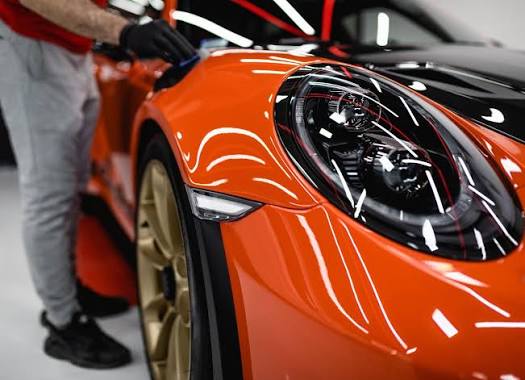
Whether you should detail your car before selling in San Diego comes down to one question: are you trying to make the car look better, or trying to move it up a condition grade? Those are different jobs with very different price tags, and only one of them reliably pays for itself.
Short answer: yes, almost always — but a $250 pre-sale detail is the right call and a $1,800 correction-and-coating package usually is not. Here is how we sort it for people, including the cases where we tell them to skip it entirely.
Key takeaways
- Autotrader puts the return on cleaning a car before you trade or sell it at upwards of 200%. That is the least self-interested source in this whole conversation.
- Kelley Blue Book grades used cars Fair, Good, Very Good, and Excellent — and only about 3% of vehicles actually qualify as Excellent. Roughly 50% land in Good, 28% Very Good, 20% Fair.
- Detailing cannot move you Good → Excellent. That grade is about records, mechanicals, and no paintwork. Detailing can move Good → Very Good — and that is where the money is.
- San Diego is unusually hard on the two things buyers judge first: clear coat and headlights. UV, salt aerosol, and sprinkler minerals do the damage; this week’s heat wave is the annual peak of it.
- Skip it if the car is going to a wholesale auction, if it needs mechanical work you are disclosing anyway, or if the paint needs correction you will never recover on a sub-$10,000 vehicle.
Who this is for
This is for the San Diego owner about to photograph a car in the driveway this weekend — the sedan that carried the commute for six years, the truck that is getting replaced, the second car the kid does not need anymore. And it is for the person with something nicer, a German coupe or a low-mile SUV, who knows the paint took a beating this summer and is not sure whether fixing it is an investment or a donation to a detailer.
There is a specific feeling here, and it is not really about money. It is standing next to a car you took care of, seeing it look tired, and not wanting a stranger to lowball you over something that is basically dirt. That instinct is correct. It is also easy to overspend on.
What a San Diego summer actually does before you list
Our crew sees the same three things every August, and this year is a strong one for all of them — San Diego is in the middle of a long-duration heat wave with possible record highs and high humidity, per ABC 10News’s August 24 forecast.
- Oxidized, hazy clear coat on horizontal panels — hood, roof, trunk lid. Sun does this from above, so it is exactly what a walk-up buyer sees first.
- Yellowed, cloudy headlights. UV clouds polycarbonate lenses, and nothing ages a car in a photograph faster. Buyers read cloudy headlights as high mileage even when the odometer disagrees.
- Water spots that are not water spots. Coastal salt aerosol and hard-water sprinkler overspray etch minerals into clear coat. A wash will not touch them. That is a polish, and it is the single most common reason a "clean" car still photographs badly.
Add cabin damage: heat bakes plastics and vinyl, sand grinds into carpet seams, and sunscreen leaves a film on the wheel and shifter that people genuinely notice with their hands during a test drive. We went through that side of it in car interior detailing in San Diego.
Where detailing moves you on the KBB condition ladder
This is the part most sellers get wrong, and it is worth being precise. Kelley Blue Book values used cars across four condition tiers, and the distribution is humbling: roughly 3% of vehicles are genuinely Excellent, about 28% Very Good, about 50% Good, and about 20% Fair. Almost everyone thinks their car is Excellent. Almost nobody’s is.
Excellent is not a cleanliness grade. It means no mechanical issues, no paintwork, complete records, flawless finish. A detail cannot get you there. But the jump from Good to Very Good is very often cosmetic — and that is a jump a $200–$400 service can genuinely make.
| What buyers notice | What actually fixes it | Worth it pre-sale? |
|---|---|---|
| Cabin smell | Deep interior clean, extraction, ozone or enzyme treatment | Always. Smell kills more deals than paint does. |
| Cloudy headlights | Headlight restoration (sand, polish, reseal) | Always. Cheapest visual years you can buy back. |
| Dull, hazy paint | One-step polish and sealant | Usually. Biggest photo improvement per dollar. |
| Water spots and etching | Chemical decontamination + light polish | Usually. A wash will not remove these. |
| Dirty wheels and tires | Wheel-face clean, iron removal, tire dressing | Always. Disproportionate effect in photos. |
| Swirls, scratches to bare paint | Multi-stage paint correction | Depends on the car. See below. |
| Dents, curbed wheels, cracked glass | Body shop, wheel repair, glass | Usually not. Disclose and discount instead. |
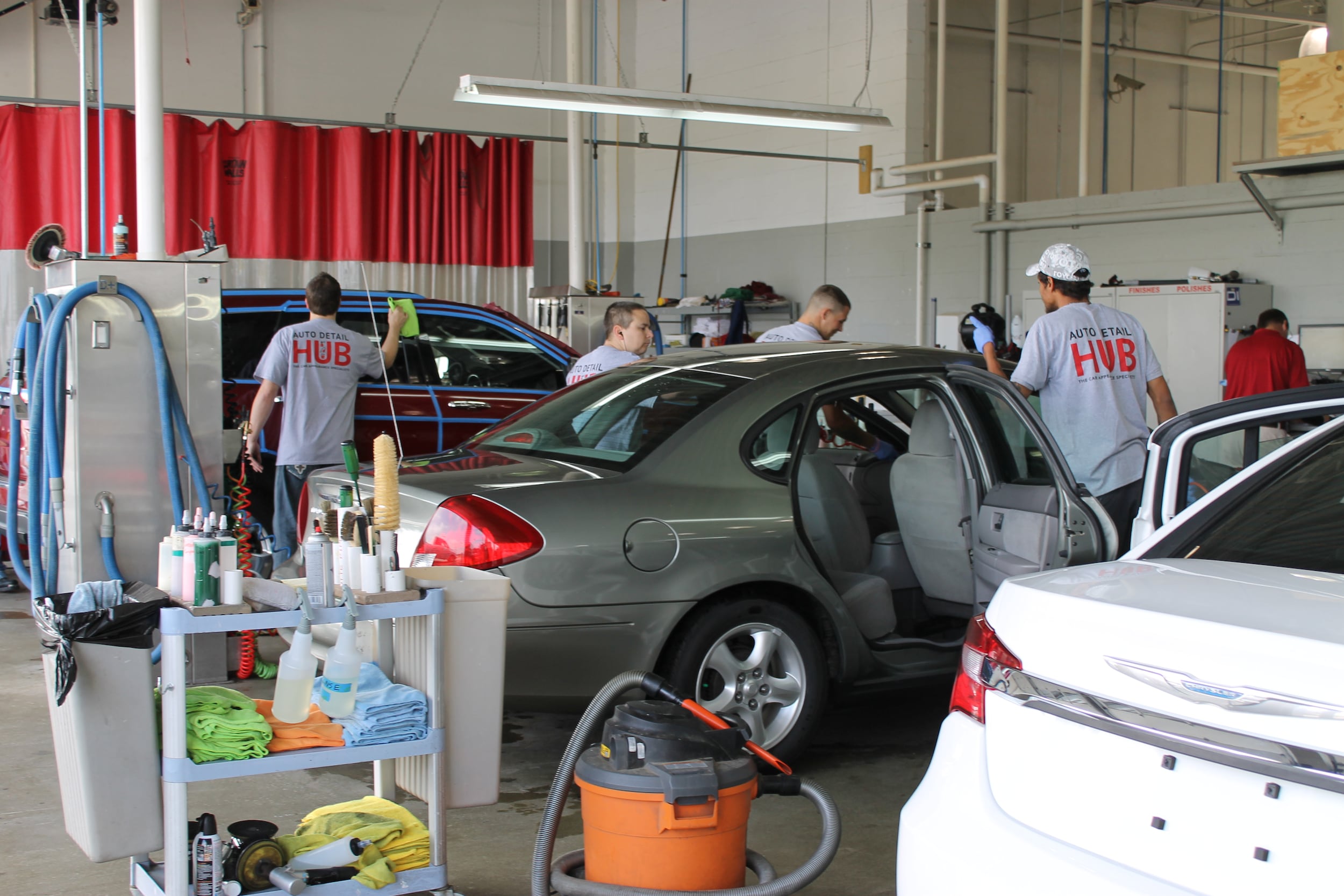
Two cars, two completely different answers
The $14,000 commuter
Ten years old, 140,000 miles, honest condition, some swirls, faded headlights, a cabin that smells like a decade of coffee. This car needs a pre-sale detail and nothing more: full interior deep clean, exterior wash and decontamination, one-step polish, headlight restoration, wheels and tires. Call it $250–$400 in San Diego depending on size and condition.
What you are buying is not perfection. It is the removal of every excuse a buyer has to negotiate. On a car in this range, a clean, correctly-lit set of photos and a cabin that smells like nothing is worth far more than the invoice — and it is the range where Autotrader’s 200%-plus figure is most believable.
What this car should not get: multi-stage correction or a ceramic coating. You will not recover it. Full stop.
The $85,000 coupe
Three years old, 24,000 miles, complete service records, garage-kept but street-parked at work all summer. Here the calculus flips. A buyer at this price is inspecting paint under a light on their phone, and visible swirling on a low-mile car reads as "this was not cared for," which is the one thing that actually moves the number at this tier.
This car can justify a one- or two-step correction plus a durable sealant. On a percentage basis it is a smaller return than the commuter’s detail. In absolute dollars it is usually much larger, because you are protecting a wider spread. If you are weighing the coating question specifically, we laid out the real math in is ceramic coating worth it in San Diego, and the correction question in paint correction in San Diego.
You are not selling a clean car. You are removing reasons to negotiate. Every dollar past that point is for you, not for the buyer — which is fine, as long as you know that is what you are doing.
When we tell people to skip it
We turn down pre-sale work fairly often, because there are situations where a detail is just a nice thing you paid for.
- The car is going to auction or a wholesale buyer. Those numbers come off a book value and a condition report. Cosmetics barely register. Wash it yourself.
- You are selling to a dealer as a trade with the new car already chosen. A basic clean-out helps at the margin; a full detail rarely changes the appraisal enough to matter.
- There is a mechanical issue you are disclosing. A gleaming car with a known transmission problem does not sell for more. It sells for the same and takes longer, because the shine and the disclosure fight each other.
- The paint needs real correction on a cheap car. If clear coat is failing or scratches are through to primer, you cannot polish it back. Price it honestly instead.
- You are keeping it another year. Then this is not a pre-sale question at all — it is a maintenance question, and it belongs on a schedule. That is covered in our guide to mobile car detailing in San Diego.
One more note on the numbers
You will find articles claiming detailing raises resale value 9% to 15%, or that detailed cars retain 45% more of their value. Be a little careful with those. Almost all of them trace back to marketing published by detailing companies, and we are a detailing company — so we are not going to hand you our own numbers and call it research.
What we will stand behind: Autotrader, which sells cars rather than detailing, puts the return on pre-sale cleaning at upwards of 200%. And KBB’s own condition distribution shows exactly how much room there is between Good and Very Good for most cars. Those two facts are enough to make the decision. You do not need the inflated ones.
Frequently asked questions
How long before listing should I detail the car?
Detail first, photograph the same day or the next morning. Golden-hour light, dry paint, and a cabin that has just been cleaned all photograph best within about 24 hours. If the car sits outside for two weeks before you shoot it, our marine layer will put a light film back on it and you will have paid for photos you did not take.
Is a mobile detail as good as a shop detail for pre-sale work?
For pre-sale purposes, yes — and it is usually more convenient, since the car never leaves your driveway and you can shoot photos the moment we pull away. Shop work matters more for extended multi-stage correction and coating cures, where controlled lighting and temperature genuinely help.
Should I fix cloudy headlights or just disclose them?
Fix them. It is one of the least expensive line items on a pre-sale detail and it changes how old the whole car looks in every single photo. It is also a genuine safety improvement, which is a fair thing to mention to a buyer.
Does a ceramic coating add resale value?
Not directly — most private buyers will not pay extra for a coating, and dealers will not either. What it does is keep the paint in the condition that gets you the better grade, which is why coatings pay off for people who keep cars, not for people selling next month.
Tell us the car and the asking price
Send a few photos, the year and model, and what you are hoping to get for it. We will come back with the shortest list of work that actually moves the number — and if the honest answer is "wash it yourself and list it," that is what we will tell you. We come to you anywhere in San Diego County.
Pricing ranges are typical San Diego County estimates for planning purposes, not quotes — actual cost depends on vehicle size, paint condition, and interior contamination. Condition-tier information is from Kelley Blue Book and resale-return figures from Autotrader; neither is a guarantee of what any individual vehicle will sell for. Nothing here is an appraisal or a valuation.